

Are Artistic Skincare Essentials Worth It Daily?
Last Updated: November 19, 2026
Quick Summary
Artistic skincare essentials are worth it daily because they are chosen for how they treat your skin, not how they decorate a shelf. A complete four-step routine of cleanse, tone, treat and moisturize is enough to keep skin clean, hydrated and protected, and it is far more likely to be repeated than a ten-step program.
- A complete KOEArtAndPoetics routine of nine products costs less than most single prestige serums.
- Cleanse with Micellar Cleansing Water at $9.80 for light days and the Oil To Milk Cleanser at $16.60 for heavy makeup.
- Apply the Hydrating Toner at $10.90 to damp skin, then layer serum thinnest to thickest before moisturizer.
- Introduce one new active at a time and give it a week or two before adding another.
- Patch test behind the ear or inner forearm and repeat for two or three days before facial use.
Table of Contents
- Quick Comparison: Nine Artistic Skincare Essentials at a Glance
- What Makes a Skincare Routine Artistic, Not Just Decorative
- Step 1: Cleanse With Micellar Water or the Oil-To-Milk Cleanser
- Step 2: Tone, Then Layer Serum Before Moisturizer
- Step 3: Seal Hydration With a Day Cream or Overnight Cream
- Artisan Skincare Products Benefits: What Small-Batch Formulation Actually Delivers
- How to Read Skincare Labels for Hidden Chemicals
- A Minimalist Skincare Routine for Beginners Who Want Fewer, Better Steps
- Frequently Asked Questions
Quick Comparison: Nine Artistic Skincare Essentials at a Glance
Artistic skincare essentials for daily use are the products you reach for every morning and every night, chosen for how they treat your skin rather than how they decorate a shelf. At KOEArtAndPoetics, we built our line around a simple idea: the canvas matters more than the frame. Below is the full lineup, priced in USD, so you can see what each step costs before you commit.
| Product | Price | Step in Routine | Best For | Standout Detail |
|---|---|---|---|---|
| Micellar Cleansing Water | $9.80 | Cleanse | All skin types | Hyaluronic acid, linden flower, chamomile |
| Sensitive Skin Oil-To-Milk Cleanser | $16.60 | Cleanse | Sensitive skin, heavy makeup | Dermatologically tested, oil-gel turns to milk |
| Hydrating Toner | $10.90 | Tone | Dry, dehydrated, dull skin | Rose water and hyaluronic acid, fragrance free |
| Dewdrop Hyaluronic Serum | $34.00 | Treat | All skin types | Fragrance free, dye free, vegan |
| Niacinamide Vitamin Boost Serum | $43.30 | Treat | Dull, uneven tone | Vitamin C, niacinamide, vitamin B5 |
| Sensitive Skin Moisturiser | $9.87 | Moisturize | Redness-prone skin | Calms irritation, fragrance free |
| Oil-Free Daily Moisturizer | $46.40 | Moisturize | Oily and sensitive skin | Squalane and pro-vitamin B5, no shine |
| Sensitive Skin Overnight Cream | $10.43 | Night seal | Sensitive, redness-prone skin | Aloe juice, hyaluronic acid, fragrance free |
| Glow Ritual Face Mask | $51.80 | Weekly treatment | Oily and combination skin | Binchotan white charcoal, warming formula |
Price
Nine products, no filler. A complete routine costs less than most single prestige serums, which is the first honest argument for buying small-batch.
What Makes a Skincare Routine Artistic, Not Just Decorative
Artistic skincare is a routine built around your skin's actual behavior and your own sense of identity, not around a trend cycle. Decorative skincare looks good on a shelf. Artistic skincare does something: it calms, hydrates, protects, and repeats.
The distinction matters because the market is crowded with pretty packaging and thin formulas. A brand can wrap a mediocre cleanser in gorgeous design and call it art. We think the reverse is what counts. The formula earns the label, and the design honors it.
Here is how we separate the two:
- Intent over aesthetic. Every step has a job. If you cannot name what a product does for your skin, it is decoration.
- Rhythm over novelty. A routine you repeat beats a routine you admire. Consistency is the medium.
- Identity over trend. Products that fit who you are get used. Products that fit a trend get abandoned in a drawer.
- Skin type over marketing. Normal skin, dry skin, oily skin, combination skin, and sensitive skin each need different handling. A routine that ignores this is costume, not craft.
The American Academy of Dermatology's guidance on skin care makes the same point from a clinical angle: a consistent, gentle routine matters more than a long list of products. That is the standard we hold ourselves to.
Step 1: Cleanse With Micellar Water or the Oil-To-Milk Cleanser
Cleansing is where most routines go wrong, usually by doing too much. Pick one cleanser for your morning and one for your evening, and stop there.
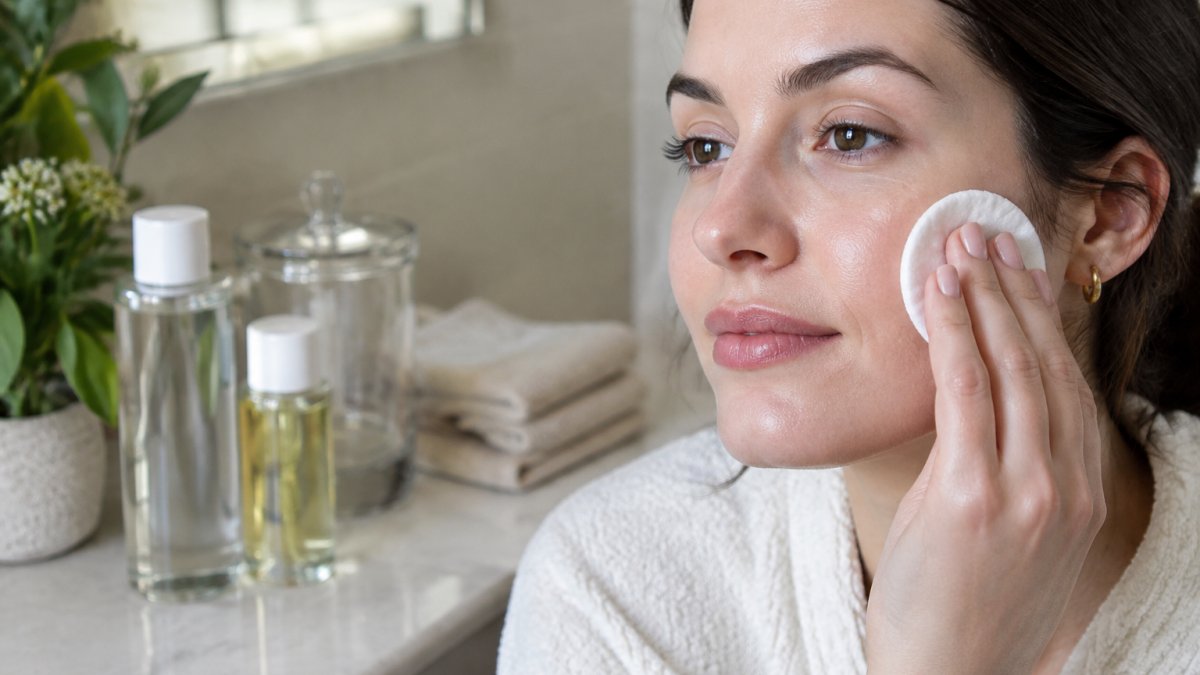
For light days, reach for Micellar Cleansing Water at $9.80. It lifts makeup and impurities from the face, eyes, and lips on a cotton pad, and it carries hyaluronic acid with calming linden flower and chamomile extracts. It is listed for all skin types.
For heavy makeup, sunscreen, or a double-cleansing night, use the Sensitive Skin Oil To Milk Cleanser at $16.60. The oil-gel texture dissolves makeup, then turns silky when it meets water. It is dermatologically tested and suitable for sensitive skin customers.
Step 2: Tone, Then Layer Serum Before Moisturizer
Toning is the step people skip and then wonder why their serum feels sticky. A pH-balancing toner resets the skin after cleansing and gives the next layer something to hold onto.
Our Hydrating Toner at $10.90 is infused with rose water and hyaluronic acid for additional moisture. It is fragrance free, allergen label free, and listed as good for dull or dehydrated skin. Splash it into your hands and press it over the face while the skin is still damp.
Then apply serum. Two options cover most needs:
- Dewdrop Hyaluronic Serum ($34.00) for hydration. Two to three drops, pressed into face and neck. Fragrance free, dye free, vegan, and made for sensitive skin.
- Niacinamide Vitamin Boost Serum ($43.30) for dullness and uneven tone. Vitamin C, niacinamide, and vitamin B5 work on brightness and texture without weight.
Layer thinnest to thickest. Water-based serum first, then cream. If you use both serums, alternate mornings rather than stacking them, and give each one a week before judging results.
Step 3: Seal Hydration With a Day Cream or Overnight Cream
Moisturizer is the layer that keeps everything underneath from evaporating. Match it to your skin type and your climate, not to the season's packaging.
For daytime on oily or combination skin, the Oil-Free Daily Moisturizer at $46.40 delivers hydration without shine. Squalane and pro-vitamin B5 soften and condition, and it wears well under makeup.
For sensitive, redness-prone skin, the Sensitive Skin Moisturiser at $9.87 calms irritation and supports the barrier with aloe juice and hyaluronic acid. It is fragrance free and absorbs without grease.
At night, the Sensitive Skin Overnight Cream at $10.43 takes over. Aloe vera juice and hyaluronic acid support overnight recovery, and one to three pumps over face, neck, and décolleté is enough.
Watch out: in dry winter air, an oil-free day cream alone may not hold. Add a hydrating serum underneath before you switch to a heavier cream.
Artisan Skincare Products Benefits: What Small-Batch Formulation Actually Delivers
The artisan skincare products benefits question deserves a straight answer: smaller batches usually mean tighter formulation choices and clearer ingredient lists, not magic. What you get is a shorter, more deliberate product line where each item has a defined job.
That focus shows up in practice. Our serums are fragrance free and dye free. Our overnight cream is fragrance free. Our Glow Ritual Face Mask uses binchotan white charcoal and sodium bicarbonate.
Three advantages a focused range can offer:
- **
- Ingredient clarity. Shorter formulas are easier to read and easier to patch test.
- Consistent layering. Products designed as a set layer predictably, without pilling or conflict.
How to Read Skincare Labels for Hidden Chemicals
Reading a label for hidden chemicals starts with the ingredient list order: ingredients appear by weight, so the first five names tell you most of what you are putting on your face. Everything after that is usually under one percent. That single rule does more work than any app or badge.
Here is the practical method we recommend:
- Check the first five ingredients. Water, glycerin, and butylene glycol are common bases. If an active you care about appears after the preservatives, there is very little of it. A "hyaluronic acid" cleanser where hyaluronate sits behind phenoxyethanol is a marketing claim, not a treatment.
- Know the fragrance words. "Fragrance" or "parfum" can stand in for a blend of dozens of compounds, and the individual components do not have to be disclosed. If your skin reacts, choose fragrance-free formulas rather than "unscented" ones, which may still contain masking fragrance (the American Academy of Dermatology).
- Look for the claims that matter. Fragrance free, dye free, allergen label free, and dermatologically tested are checkable statements. "Clean" and "natural" are not defined terms, and neither guarantees a product is gentler.
- Watch for alcohol high in the list. It is not automatically bad, but near the top it can dry sensitive skin. Denatured alcohol in the first five ingredients of a leave-on product is a reason to patch test first.
- Check for the preservative system. Phenoxyethanol and ethylhexylglycerin appear in our serums. Preservatives keep water-based products safe; a product with no preservative system in a water base is a risk, not a virtue. Anhydrous oils and balms can be preservative-free safely; water-based serums and toners cannot.
- Patch test before full use. Apply a small amount behind the ear or on the inner forearm and wait a day. Repeat on the same spot for two or three days before using it on the face, because some reactions are delayed.
The FDA's consumer information on cosmetics and labeling explains which claims are regulated and which are marketing language, and it is worth reading once. The short version: the FDA does not require cosmetic firms to prove safety before marketing, and it does not review most label claims in advance, so the label is a starting point rather than a guarantee.
Watch out: a reaction is not always an allergy. Burning, stinging, and redness within minutes usually point to irritation from an active or a fragrance component, while a delayed rash or swelling is more consistent with an allergy. Stop the product, keep the rest of your routine bland, and reintroduce one item at a time so you can identify the cause.
Ingredient compatibility is the other half of label reading. Some combinations are fine layered, and some are better separated:
- Exfoliating acids and retinoids. Use them on different nights. Together they raise the odds of redness and flaking, especially on sensitive skin.
A simple rule covers most of it: introduce one new active at a time, give it a week or two, and keep a fragrance-free moisturizer and sunscreen as your constant base so a reaction has somewhere obvious to show up.
A Minimalist Skincare Routine for Beginners Who Want Fewer, Better Steps
A minimalist skincare routine for beginners is four steps: cleanse, tone, treat, moisturize. That is enough to keep skin clean, hydrated, and protected, and it is far more likely to be repeated than a ten-step program. The point is not to own fewer products for its own sake; it is to make each step earn its place so you can tell what is working.
Start here:
- Cleanse. Micellar water in the morning, oil-to-milk cleanser at night if you wear makeup or sunscreen.
- Tone. Hydrating toner on damp skin.
- Treat. One serum only. Dewdrop Hyaluronic Serum if your skin feels dry; Niacinamide Vitamin Boost Serum if tone is your concern.
- Moisturize. Oil-free in the day, overnight cream at night.
Add the Glow Ritual Face Mask once a week if you are oily or combination. Add Star Burst Art Patches at $4.26 if you want a playful accent.
Watch out: beginners often add a new active every week and then cannot tell which product caused the sting. Introduce one new product at a time and give it two weeks before adding another.
The four steps are the foundation. What changes is the texture and the extras, and that depends on your skin type, your climate, and your season rather than on a trend:
- Oily or combination skin. Keep the day moisturizer oil-free and lightweight. In winter, add the Dewdrop Hyaluronic Serum underneath the day cream before you reach for a heavier product.
- Dry or dehydrated skin. Layer the hydrating toner and serum on damp skin, then seal with a cream.
- Sensitive or redness-prone skin. Keep fragrance-free formulas throughout, patch test each new item, and treat the mask as optional rather than weekly until you know how your skin responds. The Sensitive Skin Moisturiser at $9.87 is fragrance free and formulated for sensitive, redness-prone skin.
- Climate and season. In dry winter air, an oil-free day cream alone may not hold; add a hydrating serum underneath before switching to a heavier cream.
- Lifestyle. If you wear heavy makeup or sunscreen daily, the oil-to-milk cleanser earns its place at night. If you work indoors and rarely wear makeup, micellar water plus a gentle cleanse may be enough, and the second cleanser becomes optional.
A tiered way to spend, if budget is the constraint: put money into the treatment step and sunscreen, where formulation and active concentration matter most, and keep cleanser and toner affordable. The Micellar Cleansing Water at $9.80 and the Hydrating Toner at $10.90 are the lower-priced steps in this routine.
If you want a deeper walkthrough with more nuance on sensitive skin, our guide to 7 skincare steps for sensitive artistic skin goes further without adding clutter.
Frequently Asked Questions
What do I need for a daily skincare routine if I want it to feel artistic?
Four steps cover most of it: cleanse, tone, treat with a serum, and moisturize. KOE builds that sequence from the Micellar Cleansing Water at $9.80, the Hydrating Toner at $10.90, the Dewdrop Hyaluronic Serum at $34.00, and the Oil-Free Daily Moisturizer at $46.40. The artistic part comes from choosing pieces whose texture, scent, and design you actually look forward to using, because a routine you enjoy is the one you repeat. Add sun protection in the morning and a mask once or twice a week.
Are artisan skincare products better for daily use than mass-market brands?
Not automatically. What matters for daily use is a short, legible ingredient list, dermatological testing where relevant, and formulas matched to your skin type. The artisan skincare products benefits show up when a smaller range means fewer overlapping actives and clearer labeling. Check the specifics rather than the story: the KOE Sensitive Skin Oil-To-Milk Cleanser is listed as dermatologically tested, and the serums are fragrance-free and dye-free. Those claims, not the packaging, are what justify daily use.
How do I read skincare labels for hidden chemicals?
Read the ingredient list in descending order of concentration and learn the handful of terms that hide behind friendlier words. Fragrance or parfum can stand in for dozens of undisclosed compounds, so fragrance-free formulas are easier to audit. Watch for alcohol listed near the top, and note that dye-free does not mean preservative-free. Compare the front label's promise against the back label's list. If a product claims to be gentle but leads with fragrance and alcohol, the back label wins.
I have sensitive skin. Will artistic skincare essentials irritate it?
Sensitivity depends on formulation, not on branding. Start with fragrance-free options such as the Sensitive Skin Moisturiser at $9.87 or the Sensitive Skin Overnight Cream at $10.43, and patch test on your inner forearm for two or three nights before using anything on your face. Introduce one new product at a time so you can identify the cause of any stinging or redness. If a product burns rather than tingles, stop using it and return to the routine that was working.
What is the 4-2-4 rule, and does it apply to a minimalist routine?
The 4-2-4 rule is a timing guideline: four minutes to cleanse, two minutes to apply treatments, and four minutes to moisturize and protect. It is a pacing habit rather than a required product count, which makes it a good fit for a minimalist skincare routine for beginners. Cleansing for a full four minutes is longer than most people need, so treat the numbers as a rhythm. The useful part is the two-minute pause that lets each serum layer absorb before the next step.
